


LATEST ARTICLES
Blog
Latest articles on health, aesthetics, and surgery from Dr. Özgür Erdem.
 23.05.2026Antalya
Male Rhinoplasty
Male Rhinoplasty: Preserving Natural Appearance and Masculine Features Rhinoplasty is one of the surgical procedures that most significantly affects the overall appearance of the face. However, male rhinoplasty requires a much more delicate balance compared to conventional rhinoplasty. The goal is not simply to achieve an aesthetically pleasing nose, but to create a harmonious result while preserving the patient’s facial character, masculine features, and natural expression. Why Is Male Rhinoplasty Different? There are distinct anatomical differences between male and female facial structures. Male faces typically have sharper contours, a stronger jawline, and a more prominent nasal profile. For this reason, creating an overly upturned, excessively narrowed, or disproportionate nose can lead to unnatural results and an unintentionally feminine appearance. The true goal of successful male rhinoplasty is to achieve a nose that enhances facial harmony without looking “operated on.” Why Is Natural Appearance So Important? One of the most important indicators of success in aesthetic surgery is achieving a natural-looking outcome. Most male patients seek changes that positively improve their facial appearance without making it obvious that they have undergone surgery. Natural appearance means that the nose remains proportionate to the rest of the facial features, breathing function is preserved, and the patient’s facial identity remains intact. Looking like an improved version of oneself—not like someone else—is one of the most important goals. Why Is Preserving Masculine Features So Challenging? This is exactly what makes male rhinoplasty particularly demanding. There is a very fine line between aesthetic refinement and preserving characteristic masculine facial features. Flattening the nasal bridge too much, lifting the nasal tip excessively, or making the nose overly small can create an undesired feminine appearance. On the other hand, insufficient correction may leave the patient dissatisfied with the aesthetic result. That is why male rhinoplasty should never follow a one-size-fits-all approach; it must always be individually planned. What Should Be Considered During Surgical Planning? A successful male rhinoplasty assessment goes far beyond evaluating the nose alone. Important factors include: Overall facial proportions Chin and forehead projection Skin thickness Nasal bone structure Nasal tip support Breathing function The patient’s aesthetic expectations Since every patient’s anatomy is unique, the same technique will not produce the same result for everyone. Conclusion Male rhinoplasty is not simply a procedure to reshape the nose—it is the art of creating a more balanced and aesthetic facial appearance while preserving facial character. The delicate balance between natural results and maintaining masculine features makes this surgery technically more challenging. With proper planning and an experienced surgical approach, it is possible to achieve results that are both aesthetic and natural.
Read More 22.05.2026Antalya
What's endoscopic temporal lifting?
What does it improve? Drooping outer eyebrows Hollowing or volume loss in the temple area A tired or sad facial expression Mild sagging of the upper face Signs of aging around the eyes How is it performed? Small incisions (typically 1–2 cm) are made within the hairline. Tissue planes are visualized using an endoscope. The temporal fascia and surrounding soft tissues are carefully released. The outer brow and temple tissues are elevated upward. The tissues are secured using sutures or fixation devices. Advantages ✅ No large incisions ✅ Scars are hidden within the hair ✅ More natural-looking results ✅ Less swelling and bruising compared with traditional open techniques ✅ Faster recovery ✅ Can be combined with brow lift procedures Procedure Duration Typically 45 minutes to 1.5 hours, depending on whether additional procedures are performed. Recovery Swelling and a feeling of tightness during the first 3–7 days Return to social activities within 7–10 days Final results continue to settle over several weeks to months Who is a good candidate? Patients with mild to moderate temporal or outer brow drooping Individuals seeking a more youthful and refreshed upper face Patients who do not want a full facelift Those looking for natural-looking results Limitations In cases of advanced skin laxity, endoscopic temporal lifting alone may not be sufficient. It may be combined with an endoscopic brow lift, midface lift, or facelift for optimal results. From a facial aesthetics perspective: In the right patient, this is one of the most effective procedures for naturally correcting a tired facial expression.
Read More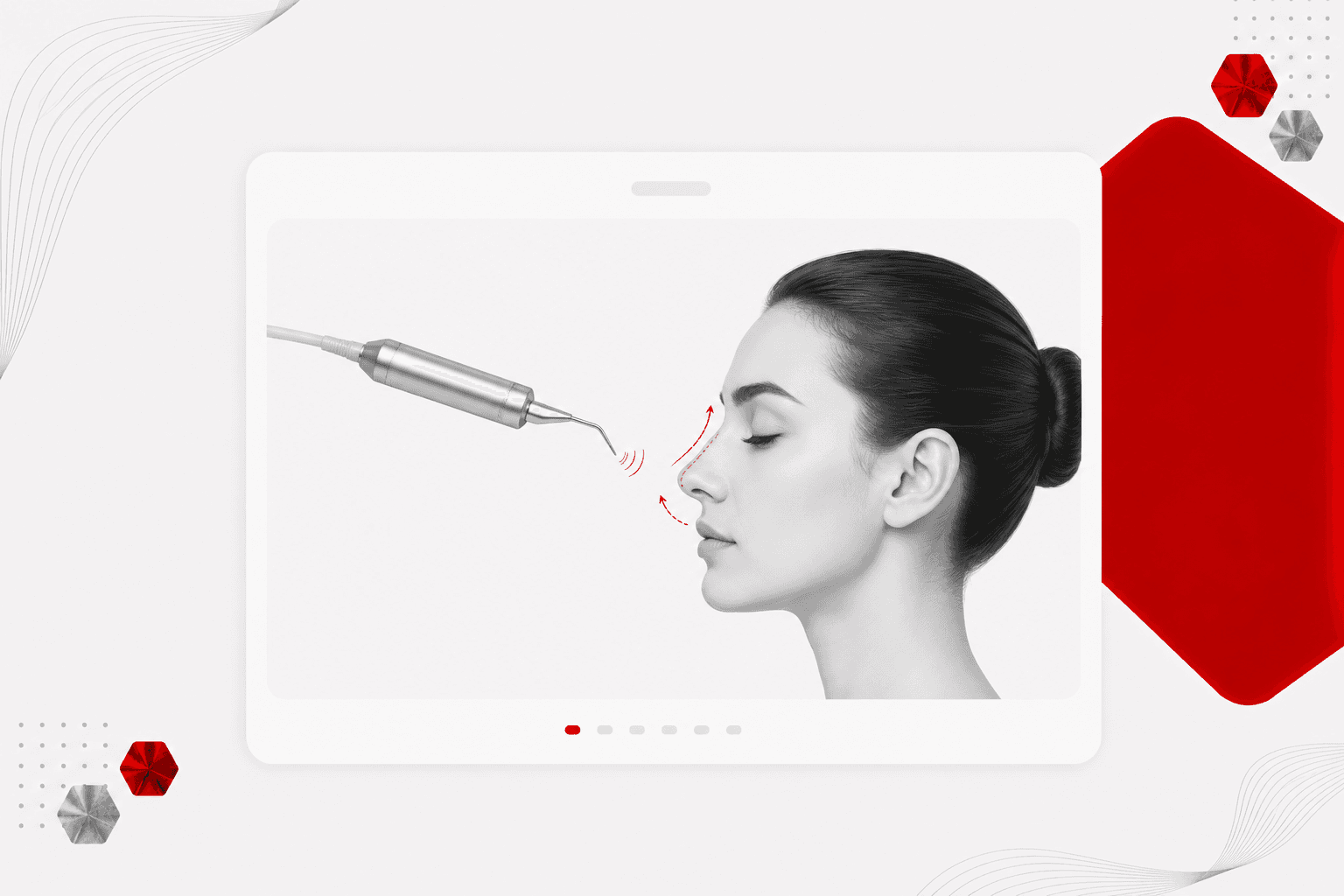 23.05.2026Antalya
What's Ultrasonic Piezo Rhinoplasty?
Ultrasonic Piezo Rhinoplasty: A Precise and Controlled Approach in Modern Nose Surgery Rhinoplasty is one of the most delicate surgical procedures, aiming to improve both facial aesthetics and nasal breathing function. With technological advancements, rhinoplasty techniques continue to evolve toward methods that offer greater precision, enhanced control, and improved patient comfort. One of these modern approaches is ultrasonic piezo rhinoplasty. What Is Ultrasonic Piezo Rhinoplasty? Ultrasonic piezo rhinoplasty is a modern rhinoplasty technique in which the nasal bones are reshaped using specialized devices that operate with high-frequency ultrasonic vibrations, instead of traditional bone-cutting or breaking methods. The piezo technology used in this procedure works selectively on hard tissues with high precision while minimizing impact on surrounding soft tissues such as blood vessels, mucosa, and skin. This allows the surgeon to work in a more controlled surgical environment. How Is It Different from Traditional Rhinoplasty? In conventional rhinoplasty, nasal bones are reshaped using osteotomy techniques, which involve controlled bone cuts. While effective, these techniques may cause more trauma to surrounding tissues. With ultrasonic piezo rhinoplasty: More precise bone reshaping is possible Soft tissues are better preserved Surgical control is enhanced Results may be more predictable Bruising and swelling may be reduced in some patients These advantages can be particularly valuable in cases requiring detailed bone refinement. Who Is a Good Candidate? Ultrasonic piezo rhinoplasty may be particularly suitable for patients who: Are bothered by a nasal hump Have nasal bone asymmetry Require delicate bone reshaping Are considering revision rhinoplasty Prefer a more controlled surgical technique However, the most appropriate approach should always be determined after a detailed consultation and examination. What Are the Advantages? 1. Precision Piezo technology allows millimetric bone contouring, helping achieve balanced and natural-looking results. 2. Greater Surgical Control It enables the surgeon to reshape nasal bones with increased accuracy and control. 3. Soft Tissue Preservation By minimizing trauma to surrounding tissues, the recovery process may be more comfortable. 4. Potentially More Comfortable Recovery Compared with traditional techniques, some patients may experience less bruising and swelling. 5. Benefits in Revision Cases Piezo technology may offer advantages in patients who have undergone previous nasal surgery, where precision becomes even more important. What Is the Recovery Process Like? Recovery varies from person to person, but the general timeline is: A nasal splint is typically worn for the first week Swelling is more noticeable during the first few days Bruising depends on individual healing characteristics Return to social activities is often possible within 7–10 days Final nasal shape may continue refining over several months up to one year Should Every Rhinoplasty Be Performed with Piezo Technology? Although ultrasonic piezo technology is an advanced and valuable tool, it is not necessarily the best option for every patient. Rhinoplasty should always be personalized. Factors such as nasal anatomy, skin quality, surgical goals, and any previous procedures all influence the ideal surgical approach. Conclusion Ultrasonic piezo rhinoplasty is an innovative modern technique that emphasizes precision, surgical control, and patient comfort. It can offer important advantages, especially in procedures involving nasal bone reshaping. However, the most important factors for a successful result are not only the technology used, but also accurate patient assessment, detailed planning, and surgical expertise.
Read More